Key Takeaway
Fort Wayne's 2026 housing market is stable with modest 3–4% price growth, tight but improving inventory, and mortgage rates hovering in the low 6% range. With over $1 billion in development and strong job growth, the city remains one of the Midwest's best values for buyers, sellers, and investors.
If you're thinking about buying a home in Fort Wayne, selling your property, or investing in Northeast Indiana real estate, you're probably wondering what 2026 has in store. After the rollercoaster of the past few years (pandemic-era bidding wars, skyrocketing prices, and then those jarring interest rate hikes), the market is finally settling into something that feels more... normal.
Here's the short version: Fort Wayne's housing market in 2026 looks stable. Not explosive, not crashing, just steady. Home prices should rise modestly (think 3-4% in hot neighborhoods), inventory will remain tight but slowly improving, and interest rates will likely hover in the low 6% range all year.
But there's a lot more to the story. Let's dig in.
What's Driving Fort Wayne's Housing Market Right Now?#
The Interest Rate Reality Check#
Remember when everyone thought rates would drop back to 3%? That's not happening. Most forecasts put 30-year mortgage rates between 6.0% and 6.5% throughout 2026, with some optimistic projections suggesting they might dip to 5.5% briefly.
Here's the thing though: this stability is actually good news. The wild rate swings of 2024 and 2025 caused real problems. Deals fell apart. Buyers panicked. Sellers got cold feet. A predictable rate environment, even at higher levels, lets everyone plan.
And Fort Wayne has a secret advantage here. When you're looking at a $235,000 median home price instead of $600,000+ in coastal cities, that 6.5% rate hurts a lot less. Monthly payments on a Fort Wayne home are still manageable for most working families.
Jobs, Jobs, Jobs#
The foundation of any healthy housing market is employment, and Fort Wayne delivers. The local unemployment rate is projected to stay below 4% throughout 2026, which is essentially full employment. When people feel secure in their jobs, they buy houses.
What makes Fort Wayne different from the old Rust Belt stereotype is diversification. Healthcare giants like Parkview Health, defense contractors like BAE Systems and L3Harris, a growing logistics sector, and yes, still plenty of manufacturing. The economy doesn't rise and fall on any single industry anymore.
Over $1 Billion Pouring Into the City#
This is the part that really matters for home values: the city is physically rebuilding itself, block by block.
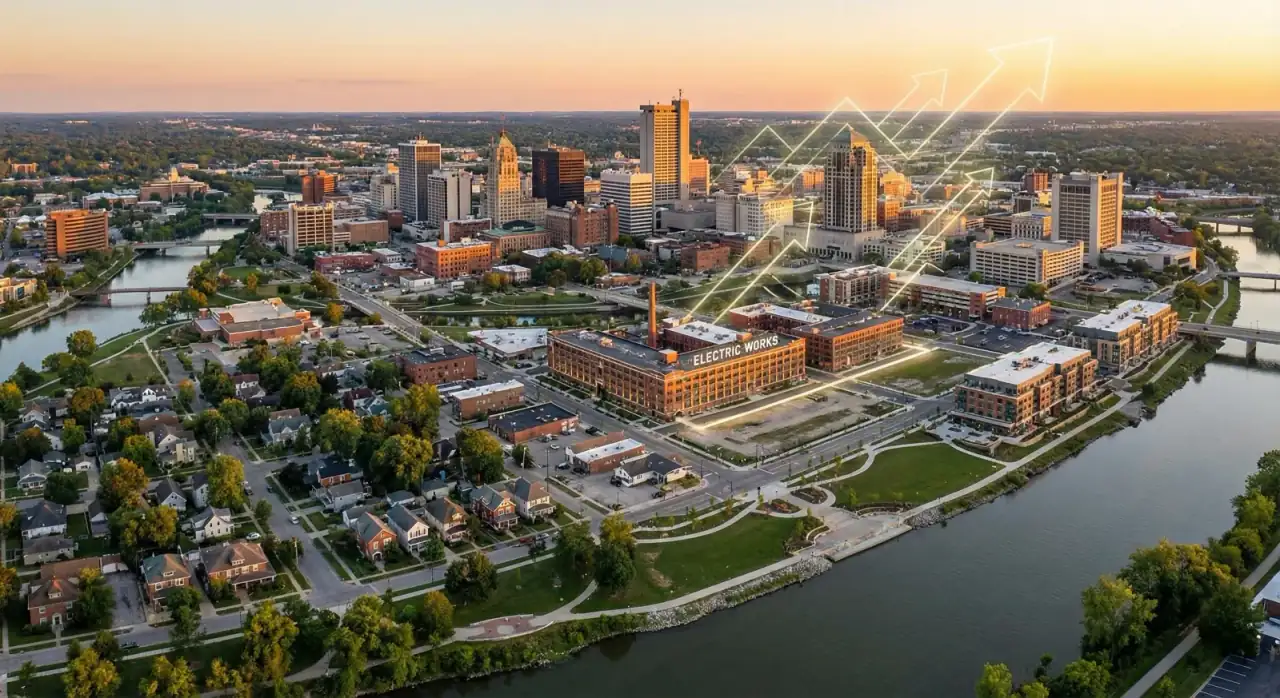
The headliner is Electric Works, a $412 million redevelopment that turned a derelict General Electric campus into a buzzing hub of restaurants, offices, and community space. The ripple effects on surrounding neighborhoods like West Central have been dramatic, and they're still spreading.
The riverfront projects (over $115 million invested so far) are turning what used to be the city's industrial back door into its showcase front porch. New luxury developments like The Lofts at Headwaters Park ($85 million) and The Pearl ($72 million) are proving there's real demand for high-end urban living here.
When this much capital flows into a city, property values follow.
Fort Wayne Home Prices: What to Expect in 2026#
The double-digit appreciation years are behind us. That's not pessimism; it's math. Homes can only get so expensive before buyers can't afford them.
Here's what the numbers actually show:
- Allen County median price: Around $250,000 (up about 2% from last year)
- Fort Wayne average home value: Approximately $235,000
- 2026 projection: 3-4% appreciation in desirable neighborhoods, flat to modest growth elsewhere
One telling statistic: nearly 53% of homes sold under their list price in late 2025. That doesn't mean prices are crashing; it means the days of sellers naming any price they wanted are over. Pricing strategy matters again. Condition matters again. Normal market dynamics are back.
The Inventory Problem (Still)#
If you're hoping for a flood of new listings, don't hold your breath. Fort Wayne has about 2.4 to 2.8 months of housing inventory right now. A balanced market typically has 5-6 months worth of homes for sale. We're still firmly in seller's market territory by that measure.
Why is inventory so tight? Two words: mortgage lock-in.
Somewhere between 55% and 60% of American homeowners with mortgages have rates below 4%. These folks bought or refinanced during the pandemic years, and now they're sitting on financial gold. Trading a 3.2% mortgage for a 6.5% mortgage—even to move into a bigger house—is hard to justify economically.
Life events still force some moves (divorces, job relocations, growing families, downsizing retirees), but discretionary upgrades have plummeted. The result? Limited supply keeps prices stable even when buyer demand softens.
The good news: this situation is gradually thawing. People are accepting the "new normal," and we're seeing more listings hit the market in 2026, especially in higher price brackets where equity gains make a move more palatable.
And if you bought near the rate peak in 2023–2024, keep an eye on where rates head this year: our refinance calculator shows your monthly savings and the break-even point where refinancing starts to pay off.
Fort Wayne Neighborhoods to Watch in 2026#
Not all areas perform equally. Here's where the action is:
Downtown Fort Wayne#
The urban core is having a moment. The Zimmerman/Volk market study found that downtown can absorb 263 new rental apartments and 78 new for-sale units annually over the next five years. Half of existing downtown rental properties are running at 95%+ occupancy.
What's driving this? Young professionals who want walkability. Remote workers relocating from higher-cost cities. Empty nesters trading suburban yards for urban convenience.
East Central#
Adjacent to downtown, East Central is emerging as the affordable alternative with similar urban perks. Historic homes, rehabilitation opportunities, and a grittier-but-genuine vibe appeal to buyers who got priced out of trendier neighborhoods. Small-scale developers and house flippers should pay attention here.
Northeast Fort Wayne (Zip Code 46815)#
This is the speed demon of local real estate. Homes here were selling in just 22 days on average in late 2025, significantly faster than the county overall. The appeal? Affordable mid-century ranches in convenient locations. Perfect for first-time buyers and downsizers who want suburban convenience without suburban prices.
The Historic South Side (Zip 46807)#
Southwood Park, Mount Vernon Park, Rudisill-Plaza—these neighborhoods attract buyers who value character over newness. Think Tudors, Craftsmans, and tree-lined streets. Millennials especially love it here. Pontiac Place, Rudisill-Plaza, and Oxford have been among the fastest-appreciating areas over the past five years.
Northwest Allen County (Huntertown Area)#
This is where you go for new construction and top-rated Northwest Allen County Schools. Expect to pay more and wait longer: average days on market stretches to 43+ days for luxury properties because fewer buyers can afford $400,000+ homes at current interest rates. But if schools are your priority, this is the zone.
Southwest (Aboite Township)#
Established, desirable, and competitive. The Southwest Allen County Schools draw families, and the mature, tree-lined neighborhoods offer what new subdivisions can't replicate. Because this area is mostly built out, inventory stays tighter than in the expanding northwest corridor.
Who's Moving to Fort Wayne?#
Here's a statistic that surprised us: 33.8% of households moving into downtown Fort Wayne are coming from outside Indiana.
That's not a typo. More than a third of new downtown residents are interstate migrants—from Chicago, from the coasts, from anywhere the cost of living got unbearable. They're bringing equity from expensive markets, or they're remote workers whose salaries go a lot further here.
This influx changes the dynamics. These buyers are less rate-sensitive than local first-time buyers because Fort Wayne prices look like a bargain to them regardless. They're propping up demand even when interest rates discourage locals.
The overall picture: Allen County has recorded eight consecutive years of positive domestic migration. People are moving here faster than they're leaving: 1.2% population growth, outpacing both Indiana and the national average.
Fort Wayne Rental Market: Strong and Stable#
With homeownership stretched by high rates, rentals are absorbing overflow demand.
Average rents run around $1,150-$1,160, well below the national average of $1,925. Year-over-year rent growth has been modest at 2.3%, which means landlords are getting steady returns without pricing out tenants.
For investors, the math works:
- Downtown multifamily: High occupancy rates (95%+) prove demand. Small apartment buildings in East Central or West Central catch spillover from the pricier core.
- Single-family rentals: Families priced out of buying still want the suburban lifestyle: yards, garages, good schools. Three-bedroom homes in areas like 46815 or 46835 offer low vacancy rates and stable occupancy.
What Could Go Wrong?#
Let's be honest about the risks:
Affordability squeeze. Fort Wayne is affordable by national standards, but for locals whose wages haven't kept up with cumulative price increases, it's getting harder. If the buyer pool at the entry level shrinks, that segment stalls.
Persistent inventory shortage. If the mortgage lock-in effect lasts longer than expected, the supply crunch could push prices up artificially, not because of genuine demand growth, but because there's simply nothing to buy.
Economic wildcards. Current forecasts assume a soft landing for the economy. If inflation resurges and rates stay higher for longer, the expected 2026 sales rebound might not materialize. And while local unemployment looks solid, a national recession would hurt confidence among those out-of-state migrants we're counting on.
Practical Advice for 2026#
If You're Buying#
You finally have some breathing room. Unlike 2021-2022, you can probably sleep on a decision overnight without losing the house. Don't be afraid to request inspections or ask for closing cost help. The market balance has shifted slightly in your favor.
Stay pre-approved and ready to act, though. If rates dip, competition spikes immediately.
Look for value in neighborhoods that haven't gotten as hot yet. Zip codes like 46819 or 46809 offer upside without the bidding war chaos.
If You're Selling#
Price it right from the start. The days of throwing out an aspirational number and getting offers are over. Correctly priced homes sell in 20 days; overpriced homes sit for 60+ and eventually sell at a discount anyway.
Invest in presentation. With more inventory trickling in, buyers can afford to be picky. Fresh paint, curb appeal, and staging yield better returns now than when buyers were desperate.
If your home has unique character, especially historic architecture in places like 46807 or West Central, play that up. In a sea of similar suburban construction, character sells.
If You're Investing#
Focus on cash flow over speculation. With appreciation slowing to 3-4%, flipping margins are tighter. Buy-and-hold strategies in high-demand rental zones (downtown, East Central) make more sense.
Match your investment to demographics. Smaller, quality units for downtown professionals. Family homes in good school districts for long-term suburban tenants. The data tells you what people want; build your portfolio accordingly.
The Bottom Line#
Fort Wayne's real estate market in 2026 isn't exciting in the headline-grabbing sense. No crash. No boom. Just a city with over $1 billion in development momentum, a diversified job market, a steady stream of new residents, and home prices that remain genuinely affordable by American standards.
For buyers, it's the best market in years to make a thoughtful purchase without panic. For sellers, it rewards preparation and realistic pricing. For investors, fundamentals matter more than speculation.
After years of turbulence, that kind of stability might be exactly what everyone needs.
Looking for personalized guidance on Fort Wayne real estate? Contact Indiana Home Match for expert local insights on buying, selling, or investing in Northeast Indiana.